Medway Pride CIC, MGSD Centre, 331 High Street Rochester Medway ME1 1DA
info@medwaypride.uk

Medway Pride Fund
Medway Pride CIC is funded through community donations and sponsorship. All funds go towards delivering our aims and objectives. Please donate to our Medway Pride Fund
Shop
Welcome to our affiliated web shop. We’ve partnered with our friends A One Vinyl to bring you a great range of LGBT merchandise. All orders are produced individually on demand. A One Vinyl is supporting the LGBTQIA+ community… Read More
Learn MoreSponsor Medway Pride 27
What is Medway Pride 27 Medway Pride 27 is an LGBTQIA+ Community Event where everyone is welcome to celebrate diversity and inclusion with the LGBTQIA+ community of Medway & Beyond This year we will be working with our… Read More
Learn MoreTOGETHER IN PRIDE
Are you a member of the LGBTQIA+ community, a family member friend or ally intrested in creative art and craftwork or looking to make podcasts, be a radio DJ or have an intrest in digital music creation. Together… Read More
Learn MoreINTRA WINTER PRIDE
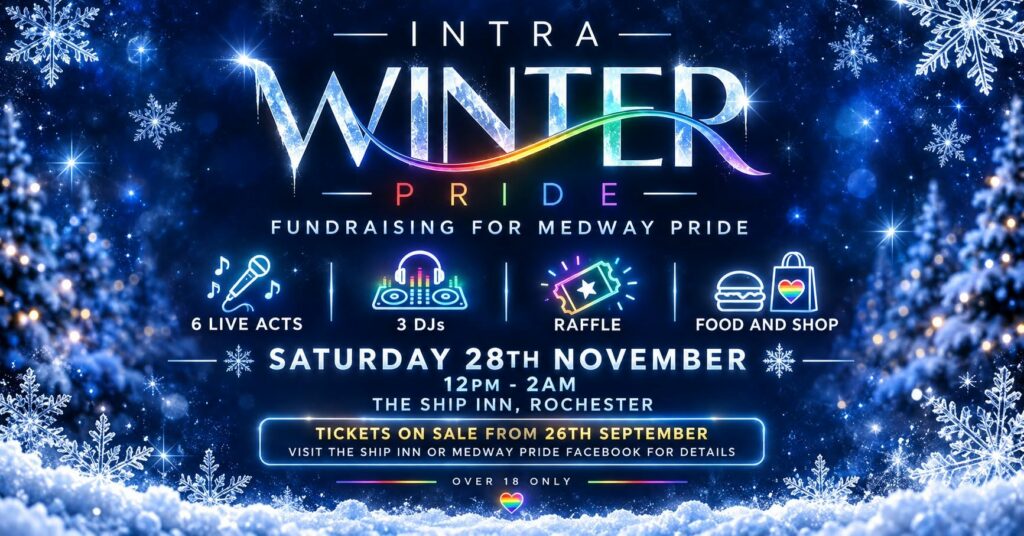
Medway Pride CIC Presents INTRA WINTER PRIDE fundraising for Medway Pridel
SIX LIVE ACTS, THREE DJ’s, RAFFLE AND FOOD AND PRIDE SHOP!
OVER 18YRS ONLY TICKETS AVAILABLE FROM SAT 26TH
LOCATION THE SHIP INN ROCHESTER
347 High St, Rochester ME1 1DA
Live Acts
Tiffany Wells, Caramel Fleur, Ariana Grande Tribute, The Y2K Experience, Luna Howl and Sam Solace
DJs
DJ Craig A, DJ Gregoryy and DJ Smudge.
Hosted by
Jordan Wood and Jordan Chan.
There’ll also be food from Poco Loco, a fundraising raffle, festive Pride energy and entertainment right through until 2am.

https://www.zeffy.com/en-GB/ticketing/intra-winter-pride
Early Bird – all day ticket £5
Enjoy the whole day from 12pm-2am. Early bird access.
Early Bird – Afternoon Ticket £3
Valid between 12pm-7pm ONLY!
Early Bird – Evening Ticket £3
Evening Ticket, entry from 7pm
All day ticket £8
All day ticket from 12pm-2am
Afternoon Ticket £6
Afternoon ticket only entry from 12pm-7pm
Evening Ticket £6
Evening ticket only, entry from 7pm
Add a donation to support medway pride
Get ready for Intra Winter Pride — a huge day and night of live entertainment, DJs, food, fundraising and Pride celebrations at The Ship Inn, Rochester, all while raising money for Medway Pride.
📅 Saturday 28th November
🕛 12:00pm – 2:00am
📍 The Ship Inn, Rochester
🔞 Strictly 18+
Join us for a full day of entertainment featuring:
Live Acts
Tiffany Wells, Caramel Fleur, Ariana Grande Tribute, The Y2K Experience, Luna Howl and Sam Solace
DJs
DJ Craig A, DJ Gregoryy and DJ Smudge.
Hosted by
Jordan Wood and Jordan Chan.
There’ll also be food from Poco Loco, a fundraising raffle, festive Pride energy and entertainment right through until 2am.
Intra Winter Pride has been created to bring the community together for an incredible winter celebration while raising money for Medway Pride. Money raised through ticket sales, the raffle and fundraising activities will contribute towards the costs of delivering the event, with funds raised supporting Medway Pride.
Whether you’re coming for the live acts, DJs, food, raffle or simply a brilliant Pride night out, come and join us for one huge celebration.
Come for the Pride. Stay for the party. Help us raise money for Medway Pride. ❄️🏳️🌈
Intra Winter Pride
Raising money for Medway Pride






















We are a Proud Member of UKPON