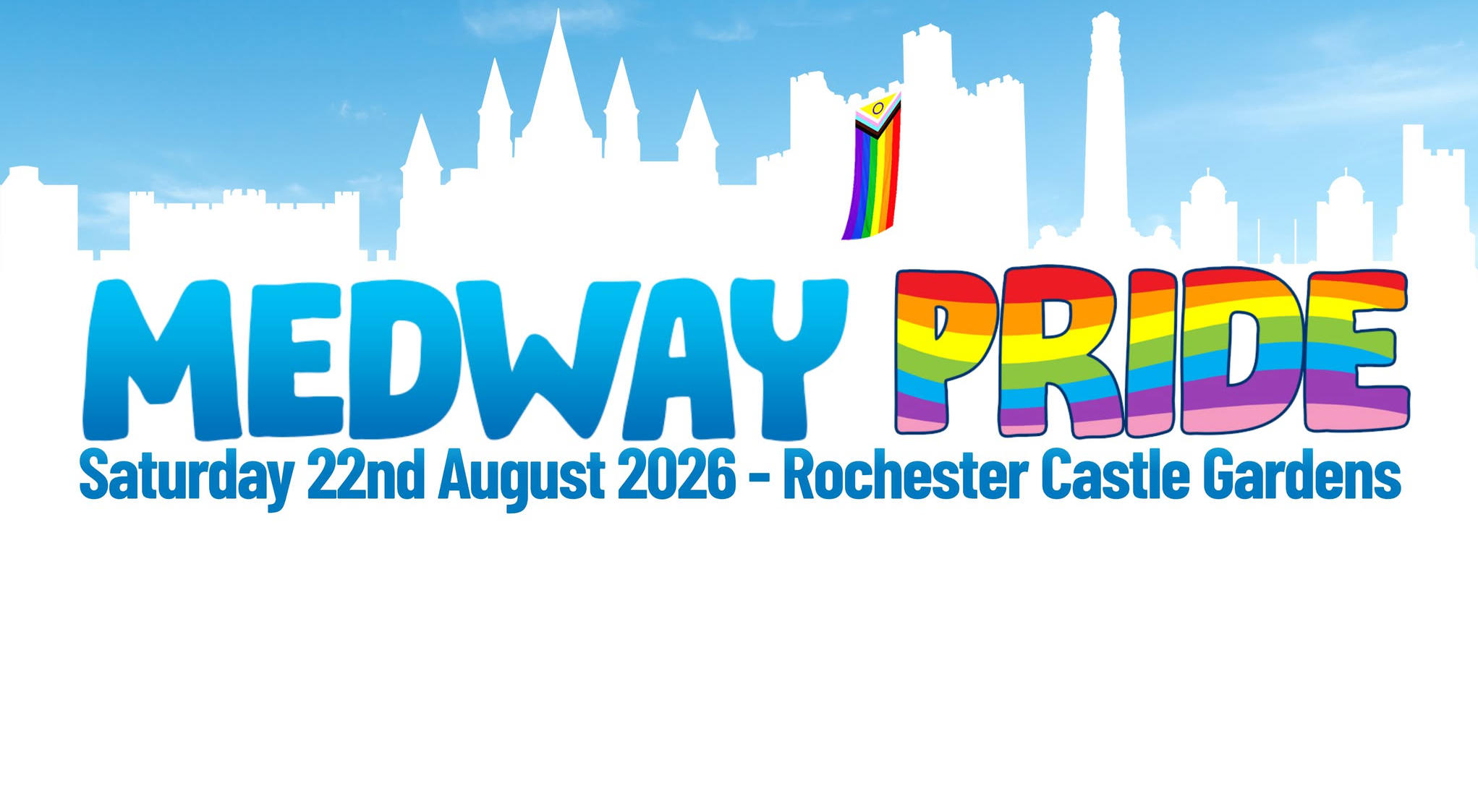
For 2026 Medway Pride and our partner Nucleus Arts are hosting out Pride is a Protest and a Celebration LGBTQIA+History history exhobition between 20th and 25th of February
This exhibition includes both written and oral information about the formation of LGBTQIA+ equality law and how the delivery of change was brought about. The information is accesable at the exhibition by using QR code links on any internet conected device (Smart Phone, Tablet etc).
The exhibition is the begining of a journey to discover how these changes affected the lives of LGBTQIA+ people their families and friends over the period 1957 to 2025, which will be developed over the comming months for a following exhibition.
Open Monday to Saturday 10am to 4pm at the Halpern Gallery 272 Hight Street, Chatham, Kent, ME4 4BP
National LGBTQIA+ History Month Science and Innovation
This LGBTQIA+ History Month, we’re celebrating queer pioneers in science and innovation.
Dr. Sara Josephine Baker. A public health trailblazer, she transformed infant healthcare in early 20th century New York, dramatically reducing child mortality in some of the city’s poorest neighbourhoods. She also played a key role in tracking down “Typhoid Mary,” reshaping how public health responds to outbreaks.
Baker lived her life in close partnership with women, building a home and community that reflected her identity long before queer visibility was safe. Her legacy is a reminder that LGBTQIA+ brilliance has always saved lives and shaped the world we live in
John Maynard Keynes was one of the most influential economists of the 20th century. He was also a gay man whose life intertwined with the Bloomsbury Group’s rich, unapologetically queer culture. His early relationships with men shaped his world long before his economic theories reshaped governments. This History Month, we honour both the brilliance of his ideas and the courage it took to live authentically in a world that wasn’t ready for him.
Michelangelo’s genius shaped the Renaissance — and his queerness shaped it too. The sculptor of David and painter of the Sistine Chapel left behind passionate poems and letters to men, revealing a depth of feeling that traditional histories tried to erase.
His art radiates intimacy, attention, and a reverence for the male form that goes far beyond technique. He was an innovator too: David was carved from a single block of marble. This had never been done before for a statue the this size. He know too that people would view the statue from below, so he ‘forced the perspective’, making David’s head larger in proportion to the rest of him. Celebrating Michelangelo during LGBTQIA+ History Month means reclaiming the truth: queer creativity has always been at the centre of culture, even when the world tried to hide it.
A pioneering computer scientist and a trans woman, Sophie Wilson co-designed the ARM architecture that enables billions of smartphones and devices today. Her legacy is one of innovation, resilience, and quiet revolution. Celebrating Sophie means celebrating the trans brilliance that powers our everyday lives.
James Barry was a trans man and military surgeon whose career reshaped medical history. Serving across the British Empire in the 19th century, he championed hygiene, nutrition, and humane treatment in hospitals long before these ideas were standard practice.
Barry performed one of the first recorded Caesarean sections where both mother and baby survived — a landmark moment in surgical history. His life shows how trans excellence has shaped medicine for centuries, even when society refused to acknowledge it.
Sally Ride made history as the first American woman in space, and later, as the first openly gay astronaut. Her achievements in physics, space exploration, and STEM education inspired generations of young people to look upward and dream bigger.
Ride kept her relationship with her partner, Tam O’Shaughnessy, private during her lifetime due to the climate of the era. Today, her full story stands as a reminder that LGBTQIA+ people have always reached for the stars and helped humanity reach them too.
Leonardo da Vinci imagined flying machines, dissected the human body, and painted the Mona Lisa but he also lived a life shaped by queer relationships. When he was 23, he and three other men were reported anonymously to the authorities for engaging a 17 year old male sex worker. No charges were made, as the Florentine authorities didn’t really have a problem with gay sex, plus there was no evidence. Leonardo went on to live and work surrounded by other gay men, and was said to be in a long term relationship with Gian Giacomo Caprotti, also known as Salaì.
His notebooks overflow with curiosity, invention, and a refusal to be boxed in. Honouring Leonardo means recognising that queer brilliance has always pushed humanity forward, imagining futures others couldn’t yet see.
Trans history is science history, and American physician Alan Hart’s story proves it. A trans man and radiology pioneer, Hart was one of the first physicians to use X rays to detect tuberculosis, a breakthrough that transformed global public health. His work helped identify infections earlier, saving countless lives at a time when TB was one of the world’s deadliest diseases.
Hart lived authentically in an era of immense hostility in the US, navigating his transition with courage and determination. His life shows how innovation thrives when people are free to be themselves, and how trans excellence has always been part of medical progress.
Most people know Florence Nightingale as the founder of modern nursing, but not so many know she was an LGBTQIA+ woman and a data visionary. Nightingale used statistics to expose the deadly impact of poor sanitation, creating one of the world’s first infographics to communicate her findings.
Her letters and lifelong relationships with women reveal a rich emotional history often erased from mainstream narratives. Nightingale’s legacy reminds us that LGBTQIA+ people have always been at the heart of scientific and social progress, reshaping systems with compassion and clarity.
Oliver Sacks spent a lifetime illuminating the human mind with compassion and curiosity. Yet he kept his sexuality hidden for decades, shaped by fear, heartbreak, and internalised shame. Late in life, he embraced love openly for the first time, a reminder that queer joy can find you at any age. His writing changed how we see each other; his story reminds us why visibility matters.
We use cookies to ensure that we give you the best experience on our website. If you continue to use this site we will assume that you are happy with it.
You can revoke your consent any time using the Revoke consent button.


























Leave a Comment
Last Updated: 18/02/2026 by Hilary Cooke
LGBT History Month 2026
For 2026 Medway Pride and our partner Nucleus Arts are hosting out Pride is a Protest and a Celebration LGBTQIA+History history exhobition between 20th and 25th of February
This exhibition includes both written and oral information about the formation of LGBTQIA+ equality law and how the delivery of change was brought about. The information is accesable at the exhibition by using QR code links on any internet conected device (Smart Phone, Tablet etc).
The exhibition is the begining of a journey to discover how these changes affected the lives of LGBTQIA+ people their families and friends over the period 1957 to 2025, which will be developed over the comming months for a following exhibition.
Open Monday to Saturday 10am to 4pm at the Halpern Gallery 272 Hight Street, Chatham, Kent, ME4 4BP
National LGBTQIA+ History Month Science and Innovation
This LGBTQIA+ History Month, we’re celebrating queer pioneers in science and innovation.
Dr. Sara Josephine Baker. A public health trailblazer, she transformed infant healthcare in early 20th century New York, dramatically reducing child mortality in some of the city’s poorest neighbourhoods. She also played a key role in tracking down “Typhoid Mary,” reshaping how public health responds to outbreaks.
Baker lived her life in close partnership with women, building a home and community that reflected her identity long before queer visibility was safe. Her legacy is a reminder that LGBTQIA+ brilliance has always saved lives and shaped the world we live in
John Maynard Keynes was one of the most influential economists of the 20th century. He was also a gay man whose life intertwined with the Bloomsbury Group’s rich, unapologetically queer culture. His early relationships with men shaped his world long before his economic theories reshaped governments. This History Month, we honour both the brilliance of his ideas and the courage it took to live authentically in a world that wasn’t ready for him.
Michelangelo’s genius shaped the Renaissance — and his queerness shaped it too. The sculptor of David and painter of the Sistine Chapel left behind passionate poems and letters to men, revealing a depth of feeling that traditional histories tried to erase.
His art radiates intimacy, attention, and a reverence for the male form that goes far beyond technique. He was an innovator too: David was carved from a single block of marble. This had never been done before for a statue the this size. He know too that people would view the statue from below, so he ‘forced the perspective’, making David’s head larger in proportion to the rest of him. Celebrating Michelangelo during LGBTQIA+ History Month means reclaiming the truth: queer creativity has always been at the centre of culture, even when the world tried to hide it.
A pioneering computer scientist and a trans woman, Sophie Wilson co-designed the ARM architecture that enables billions of smartphones and devices today. Her legacy is one of innovation, resilience, and quiet revolution. Celebrating Sophie means celebrating the trans brilliance that powers our everyday lives.
James Barry was a trans man and military surgeon whose career reshaped medical history. Serving across the British Empire in the 19th century, he championed hygiene, nutrition, and humane treatment in hospitals long before these ideas were standard practice.
Barry performed one of the first recorded Caesarean sections where both mother and baby survived — a landmark moment in surgical history. His life shows how trans excellence has shaped medicine for centuries, even when society refused to acknowledge it.
Sally Ride made history as the first American woman in space, and later, as the first openly gay astronaut. Her achievements in physics, space exploration, and STEM education inspired generations of young people to look upward and dream bigger.
Ride kept her relationship with her partner, Tam O’Shaughnessy, private during her lifetime due to the climate of the era. Today, her full story stands as a reminder that LGBTQIA+ people have always reached for the stars and helped humanity reach them too.
Leonardo da Vinci imagined flying machines, dissected the human body, and painted the Mona Lisa but he also lived a life shaped by queer relationships. When he was 23, he and three other men were reported anonymously to the authorities for engaging a 17 year old male sex worker. No charges were made, as the Florentine authorities didn’t really have a problem with gay sex, plus there was no evidence. Leonardo went on to live and work surrounded by other gay men, and was said to be in a long term relationship with Gian Giacomo Caprotti, also known as Salaì.
His notebooks overflow with curiosity, invention, and a refusal to be boxed in. Honouring Leonardo means recognising that queer brilliance has always pushed humanity forward, imagining futures others couldn’t yet see.
Trans history is science history, and American physician Alan Hart’s story proves it. A trans man and radiology pioneer, Hart was one of the first physicians to use X rays to detect tuberculosis, a breakthrough that transformed global public health. His work helped identify infections earlier, saving countless lives at a time when TB was one of the world’s deadliest diseases.
Hart lived authentically in an era of immense hostility in the US, navigating his transition with courage and determination. His life shows how innovation thrives when people are free to be themselves, and how trans excellence has always been part of medical progress.
Most people know Florence Nightingale as the founder of modern nursing, but not so many know she was an LGBTQIA+ woman and a data visionary. Nightingale used statistics to expose the deadly impact of poor sanitation, creating one of the world’s first infographics to communicate her findings.
Her letters and lifelong relationships with women reveal a rich emotional history often erased from mainstream narratives. Nightingale’s legacy reminds us that LGBTQIA+ people have always been at the heart of scientific and social progress, reshaping systems with compassion and clarity.
Oliver Sacks spent a lifetime illuminating the human mind with compassion and curiosity. Yet he kept his sexuality hidden for decades, shaped by fear, heartbreak, and internalised shame. Late in life, he embraced love openly for the first time, a reminder that queer joy can find you at any age. His writing changed how we see each other; his story reminds us why visibility matters.
Medway Pride 2025 Fund Open
Medway Pride Lottery Fund
Support Medway Pride 2025 Fund Play the Medway Pride Lottery with a chance to win £25,000
Play the Medway Pride Lottery
About This Site
This website is managed by Medway Pride CIC to promote Medway Pride events and services for the LGBTQI
Tags
Recent Posts